
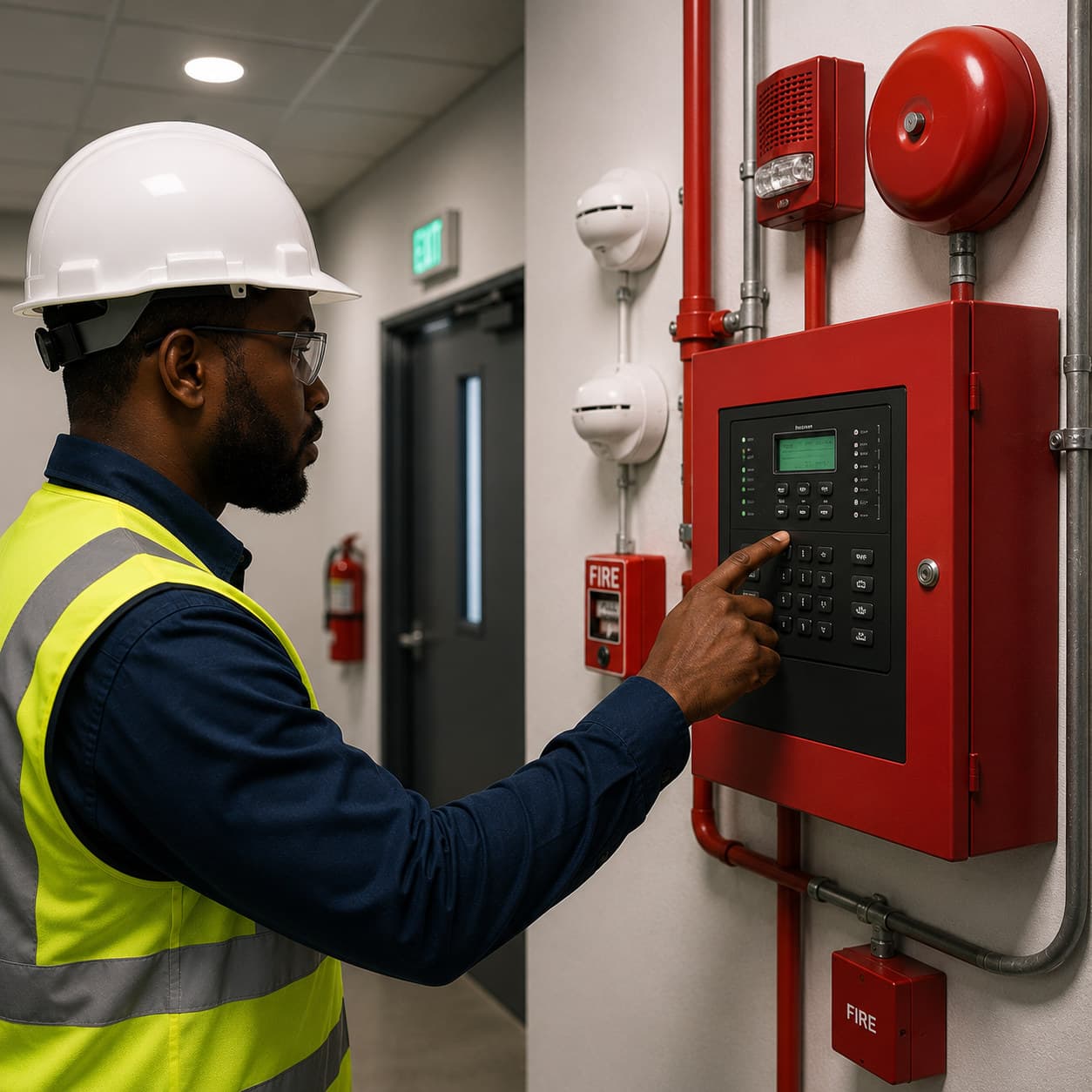
How to Choose a Fire Detection System for Your Building
Fire detection isn't a system you choose based on price or what looks good on a spec sheet — it's the one system on this list where getting it wrong doesn't just cost money, it costs lives and, very often, your ability to legally operate the building at all. That's worth slowing down for.
Here's a practical way to think through it.
1. Start with what your building actually is
A hotel with sleeping guests overnight has different requirements than a warehouse with no overnight occupancy. A commercial kitchen needs different detection than an office floor. Before comparing systems, get clear on occupancy type, building size, and what's actually inside it — that shapes everything that follows.
2. Understand the detection technology, not just the brand
- Smoke detectors catch most fires early but can false-alarm on steam, dust, or cooking.
- Heat detectors are more reliable in kitchens, garages, or dusty areas where smoke detectors struggle.
- Multi-sensor detectors combine both, reducing false alarms while staying sensitive to real ones.
The right building uses a mix, not one type applied everywhere by default.
3. Check how it integrates with everything else
A fire detection system that doesn't talk to your access control (unlocking doors automatically during an alarm) or your alarm monitoring center is doing half its job. Ask specifically how the system you're considering integrates with what else is running in the building — this is often where cheaper systems quietly fall short.
4. Confirm compliance and certification
This is non-negotiable, not a nice-to-have. Ask directly: is this system certified to the standards that apply to your building type, and can the installer provide the compliance documentation you'll need for insurance or regulatory inspection? If a vendor can't answer that clearly and immediately, that's a signal on its own.
5. Ask about monitoring and response, not just detection
Detecting a fire is only useful if it triggers a response — an alarm monitoring center, a notification to facility staff, an automatic call to emergency services. A system that only sounds a local alarm and stops there is missing the half that actually saves time when it matters most.
6. Plan for maintenance from day one
Fire systems degrade in ways that aren't visible — sensors drift, batteries weaken, wiring faults develop quietly. Choose a provider who includes a servicing schedule as part of the conversation, not as an afterthought you have to ask for separately.
7. Weigh the installer as much as the equipment
The best detection hardware installed poorly is still a liability. Ask who's actually doing the install, what their track record looks like, and whether they'll be the ones servicing it going forward too — or if it becomes someone else's problem the moment the invoice is paid.
Putting in a new system, or not sure your current one would actually hold up to inspection? Book a free site survey and we'll walk your building with you before recommending anything.
Ready to put this into action?
Book a free site survey and our technical team will assess your facility in person.
Book a Free Site Survey