
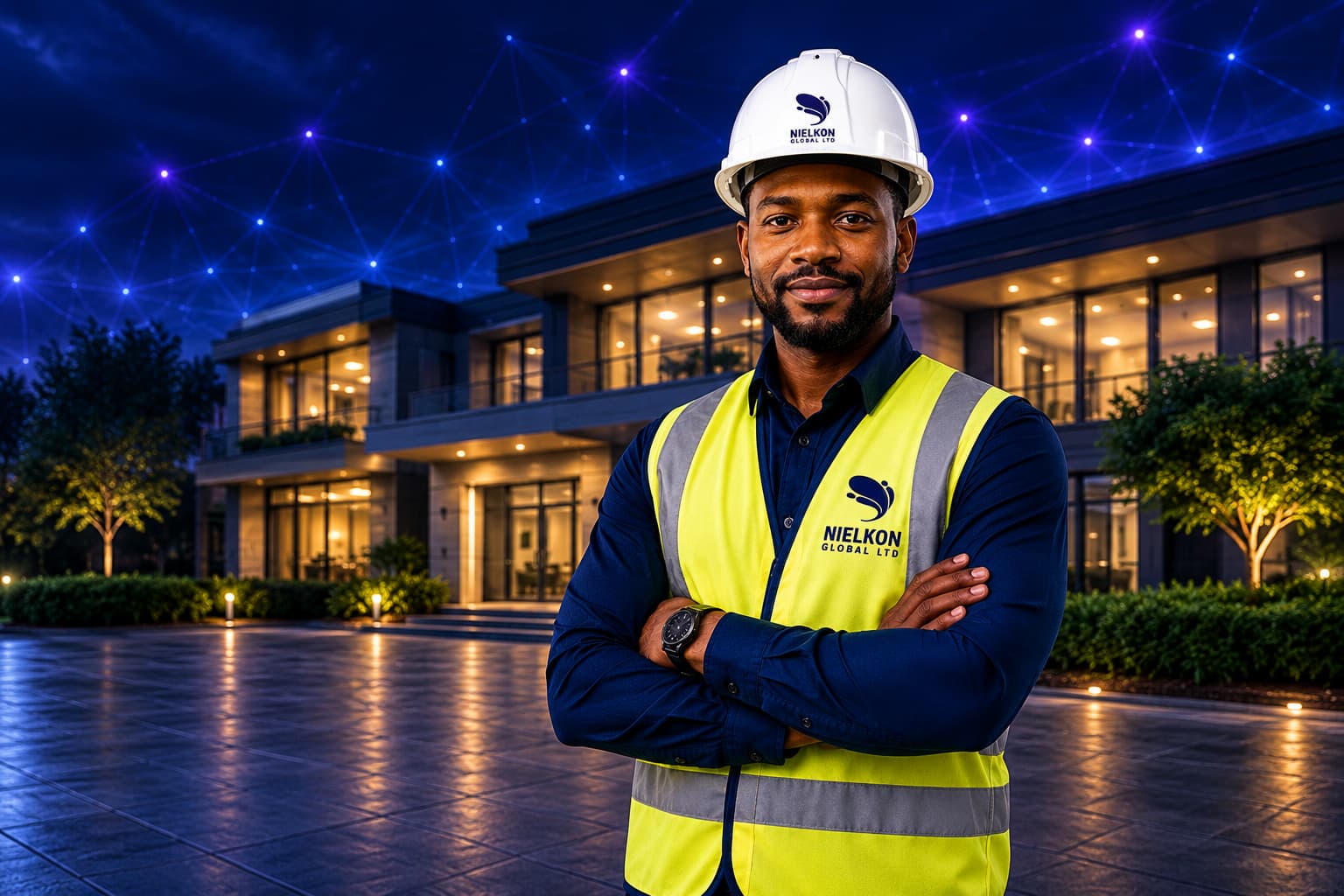
The Case for One Accountable Contractor Across Power, Security, and Automation
Most facilities in Nigeria didn't end up with three, four, sometimes five different vendors on purpose. It happened one project at a time — an electrician for the transformer, a separate company for CCTV, another for the fire alarm, someone else entirely for access control, and if there's any automation involved, a fifth name added to the list. Each decision made sense on its own. Together, they add up to something nobody actually chose: a building where no single person can tell you, with confidence, that everything is working the way it should.
We think that's the real cost people underestimate — not the money, the accountability gap.
The problem isn't the vendors. It's the seams between them.
Individually, most of these vendors do fine work. The failures tend to happen in the handoffs — the fire system that wasn't wired to unlock the access-controlled doors during an alarm, because the two companies that installed them never spoke to each other. The camera blind spot nobody caught because the CCTV installer didn't know where the electrical contractor had routed conduit. The automation system that looks impressive on a demo day but wasn't planned around the building's actual power capacity, because nobody involved in the automation project was in the room when the electrical load was calculated.
None of these are hypothetical. They're the quiet, recurring findings from site surveys on buildings that, on paper, have "good security" and "modern systems."
What changes when it's one team
When power, security, and automation are planned by the same team from the start, the seams mostly disappear — not because any one person is smarter, but because the coordination that used to happen through fragmented handoffs now happens by default, inside one planning process. The transformer sizing accounts for what the automation system will actually draw. The camera layout accounts for where the electrical contractor is already running cable. The fire system talks to the access control system because the same people configured both.
And when something does go wrong, there's no ambiguity about who's responsible. Not four companies pointing at each other. One team, one point of contact, one answer.
This isn't an argument against specialization
To be clear, this isn't a case for generalists doing shallow work across everything. It's a case for depth in each of seven distinct disciplines — electrical engineering, security and surveillance, smart automation, fire and safety, access control, network infrastructure, and ongoing maintenance — coordinated under one accountable structure instead of assembled after the fact from unrelated vendors. The expertise still has to be real in each area. What changes is whether it's connected.
Why this matters more as buildings get smarter
The more "smart" a building becomes, the more its systems depend on each other. A hotel automating guest access, lighting, and climate control isn't running one system — it's running electrical, network, and access control simultaneously, and if those were planned by three unconnected vendors, the automation layer is only ever as reliable as the weakest handoff beneath it. Fragmentation, which was merely inconvenient in a simpler building, becomes a real point of failure in a smart one.
That's the case for one contractor. Not because doing everything under one name is inherently better, but because the alternative — coordinating specialists after the fact instead of planning them together from the start — is where most of the actual risk in a building quietly lives.
Curious what that gap looks like in your own facility? Book a free site survey and we'll show you where the seams are — even if you decide not to work with us to close them.
Ready to put this into action?
Book a free site survey and our technical team will assess your facility in person.
Book a Free Site Survey